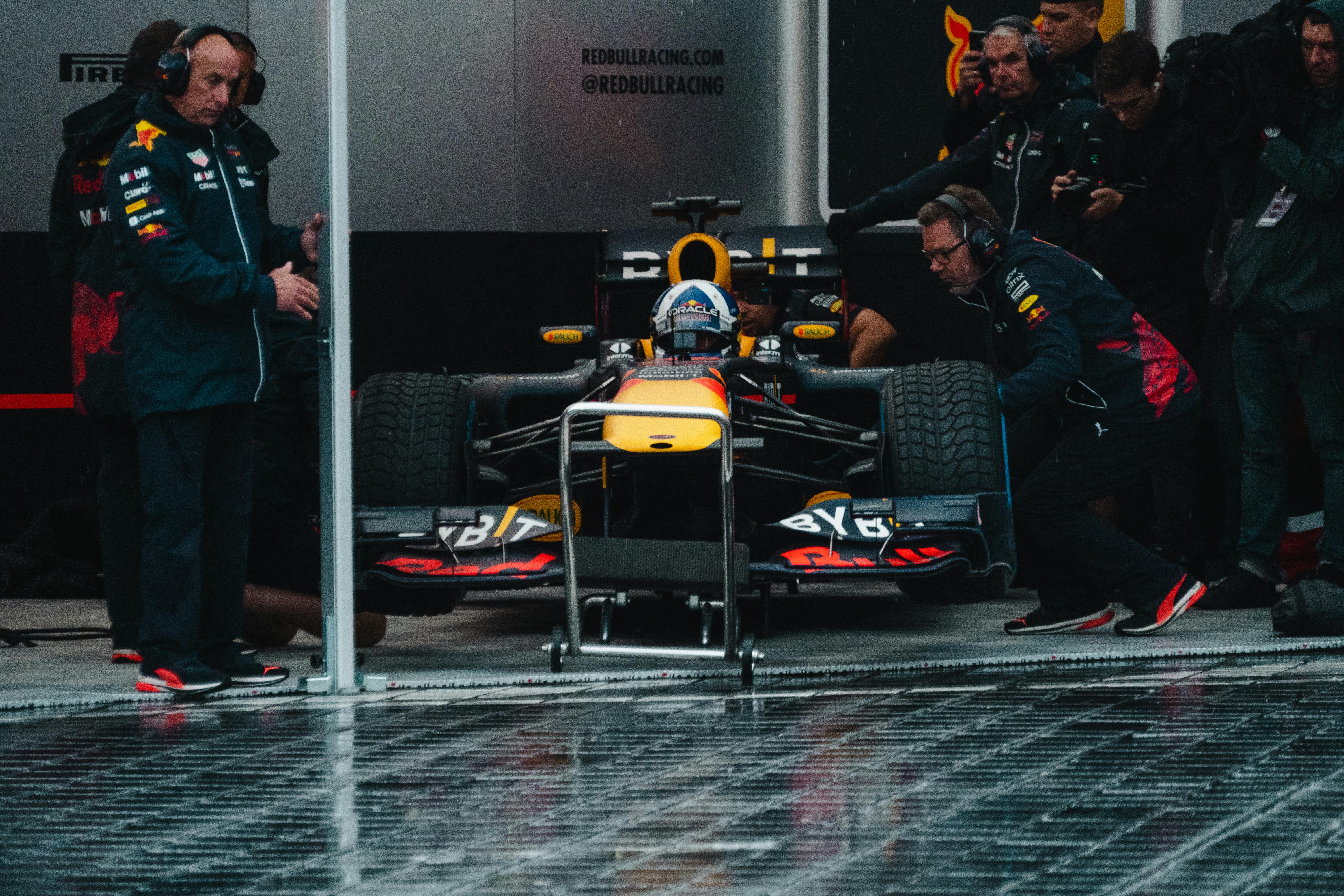
Formula 1 Mid-Season Review 2026: Championship Battles Intensify Heading Into the Summer Rounds Introduction
The 2026 Formula 1 season has reached its halfway point, and the championship battle is proving to be one of the most competitive in recent years. New technical regulations, evolving team strategies, and increasingly balanced performance across the grid have created an unpredictable campaign that has captivated motorsport fans around the world.
Unlike previous seasons dominated by a single team, the first half of 2026 has featured multiple race winners, dramatic overtakes, strategic masterclasses, and several surprise performances from both established stars and emerging talent.
With the European summer races approaching, every championship point is becoming increasingly valuable. Teams are preparing significant car upgrades while drivers understand that a strong second half of the season could determine both the Drivers' and Constructors' Championships.
As Formula 1 enters one of the busiest periods on the calendar, several major storylines are shaping what promises to be an unforgettable championship fight.
A New Era Under the 2026 Regulations
The 2026 season marks one of the biggest regulatory changes in modern Formula 1.
Updated chassis rules, revised aerodynamic concepts, and a new generation of hybrid power units have fundamentally changed how teams approach car development.
Key objectives of the regulations include:
Improving racing competitiveness Increasing energy efficiency Encouraging sustainable technology Reducing overall vehicle weight Creating more overtaking opportunities
Every team has been challenged to interpret the new rules differently, leading to significant variation in car design philosophies across the grid.
Some teams adapted immediately, while others have spent the opening races refining their understanding of the new technical package.
The Drivers' Championship Remains Wide Open
Perhaps the biggest highlight of the 2026 season has been the closeness of the championship standings.
Instead of one driver building a commanding early lead, several contenders remain firmly in the title fight.
Factors contributing to the close competition include:
Improved grid parity Greater strategic variation Circuit-specific strengths Tire management differences Reliability fluctuations
Consistency has become just as important as outright speed.
Drivers capable of regularly finishing on the podium have often outscored rivals despite winning fewer races.
Constructors' Championship Becoming Increasingly Competitive
The battle among Formula 1 teams has also intensified.
Multiple constructors have demonstrated race-winning pace depending on circuit characteristics.
Success has depended on several variables:
Aerodynamic efficiency Power unit reliability Tire degradation management Pit stop execution Strategy decisions
With development races continuing throughout the season, even small upgrades have the potential to reshape the championship order.
Every point scored during the summer rounds could become decisive later in the year.
Technical Development Never Stops
Formula 1 remains one of the world's most technologically advanced sports.
Even after introducing completely new cars for 2026, engineers continue searching for every possible performance advantage.
Current development priorities include:
Floor aerodynamics Front wing optimization Rear suspension refinement Cooling efficiency Energy recovery systems Weight reduction
Wind tunnel testing and computational fluid dynamics (CFD) simulations remain central to each team's development program.
The pace of innovation means today's fastest car may not remain the benchmark for long.
Tire Strategy Continues to Shape Race Results
While outright speed is essential, race strategy has become equally important.
Teams now devote enormous resources to understanding tire behavior under varying conditions.
Strategic decisions include:
One-stop versus two-stop races Undercut timing Tire compound selection Safety car responses Fuel management
Several races this season have been decided not by qualifying pace but by intelligent strategy execution.
As the championship progresses, strategic consistency may prove decisive.
Rookie Drivers Are Impressing
The 2026 season has also introduced several exciting young drivers.
Many rookies have adapted remarkably quickly to Formula 1's demanding environment.
Their strengths include:
Fearless overtaking Strong qualifying performances Excellent racecraft Rapid technical learning Calmness under pressure
Several newcomers have already scored valuable championship points while challenging experienced teammates.
Their emergence highlights the exceptional depth of talent entering Formula 1.
Reliability Has Become a Major Factor
The introduction of new power unit regulations has inevitably created reliability challenges.
Several teams have experienced:
Electrical system failures Cooling problems Hybrid component issues Software calibration challenges Gearbox concerns
Although performance remains important, finishing races consistently has become equally valuable.
Championship contenders understand that avoiding retirements may ultimately determine the title.
Artificial Intelligence Is Transforming Formula 1
Modern Formula 1 increasingly relies on advanced data analysis.
Artificial Intelligence now assists teams in:
Strategy simulations Tire prediction Energy deployment Pit stop timing Performance analysis Reliability forecasting
AI processes millions of data points during every race weekend.
Engineers use this information to make rapid decisions capable of influencing race outcomes within seconds.
Technology has become one of Formula 1's greatest competitive advantages.
Aerodynamics Continue to Define Performance
Despite regulatory changes, aerodynamics remain fundamental.
Teams invest enormous resources into improving:
Airflow efficiency Downforce generation Drag reduction Cooling airflow Floor performance
Small aerodynamic gains frequently translate into significant improvements over an entire race distance.
The battle between engineering departments remains as intense as the competition on track.
Sustainable Technology Drives Innovation
Formula 1 continues strengthening its commitment to sustainability.
The 2026 regulations place greater emphasis on:
Sustainable fuels Improved hybrid efficiency Reduced emissions Renewable energy integration Environmentally responsible logistics
Many innovations developed in Formula 1 eventually influence road car technology.
Manufacturers increasingly view the championship as an advanced research platform rather than solely a racing competition.
Summer Upgrades Could Reshape the Championship
The European portion of the calendar traditionally marks the arrival of major technical updates.
Teams often introduce:
Revised front wings New floor designs Improved suspension components Updated sidepods Enhanced cooling systems
These upgrades can significantly alter competitive order.
Several teams currently trailing in the standings remain confident that development packages scheduled for the summer could close the performance gap.
Pressure Builds for Drivers and Teams
As the championship enters its second half, expectations naturally increase.
Drivers must balance:
Championship ambitions Team objectives Contract discussions Media attention Physical endurance
Meanwhile, team principals face difficult decisions regarding development priorities.
Resources allocated toward the 2026 championship must also be balanced against preparation for future seasons.
Strategic planning has become increasingly complex.
Fans Are Enjoying One of the Most Competitive Seasons
Global interest in Formula 1 continues growing.
The combination of competitive racing, new regulations, and expanding international audiences has strengthened the championship's popularity.
Fans appreciate:
Close wheel-to-wheel battles Strategic unpredictability Diverse race winners Technical innovation Behind-the-scenes team content
Digital media, onboard cameras, and advanced race analytics have further enhanced the viewing experience.
Looking Ahead
The remaining races promise even greater excitement.
Several factors are expected to influence the championship:
Summer development packages Reliability improvements Weather conditions Tire allocation Sprint race weekends Driver consistency
With only half the season completed, every race now carries increasing championship significance.
Momentum gained during the summer could ultimately determine who lifts Formula 1's most prestigious trophies.
Conclusion
The first half of the Formula 1 2026 season has delivered exactly what motorsport fans hoped for: close competition, technical innovation, strategic variety, and an unpredictable championship battle. The introduction of new regulations has successfully reshaped the competitive landscape, allowing multiple teams and drivers to challenge for victories while showcasing the incredible engineering talent that defines Formula 1.
As teams prepare for the crucial summer rounds, development races are expected to intensify both on and off the track. Engineers will continue refining aerodynamic packages, drivers will fight for every championship point, and strategists will search for the smallest advantages that could decide races.
With numerous Grands Prix still remaining, both the Drivers' and Constructors' Championships remain far from settled. If the opening half of the season is any indication, Formula 1 2026 is well on its way to becoming one of the most memorable and fiercely contested championships in the modern era of motorsport.
Published on 7/5/2026