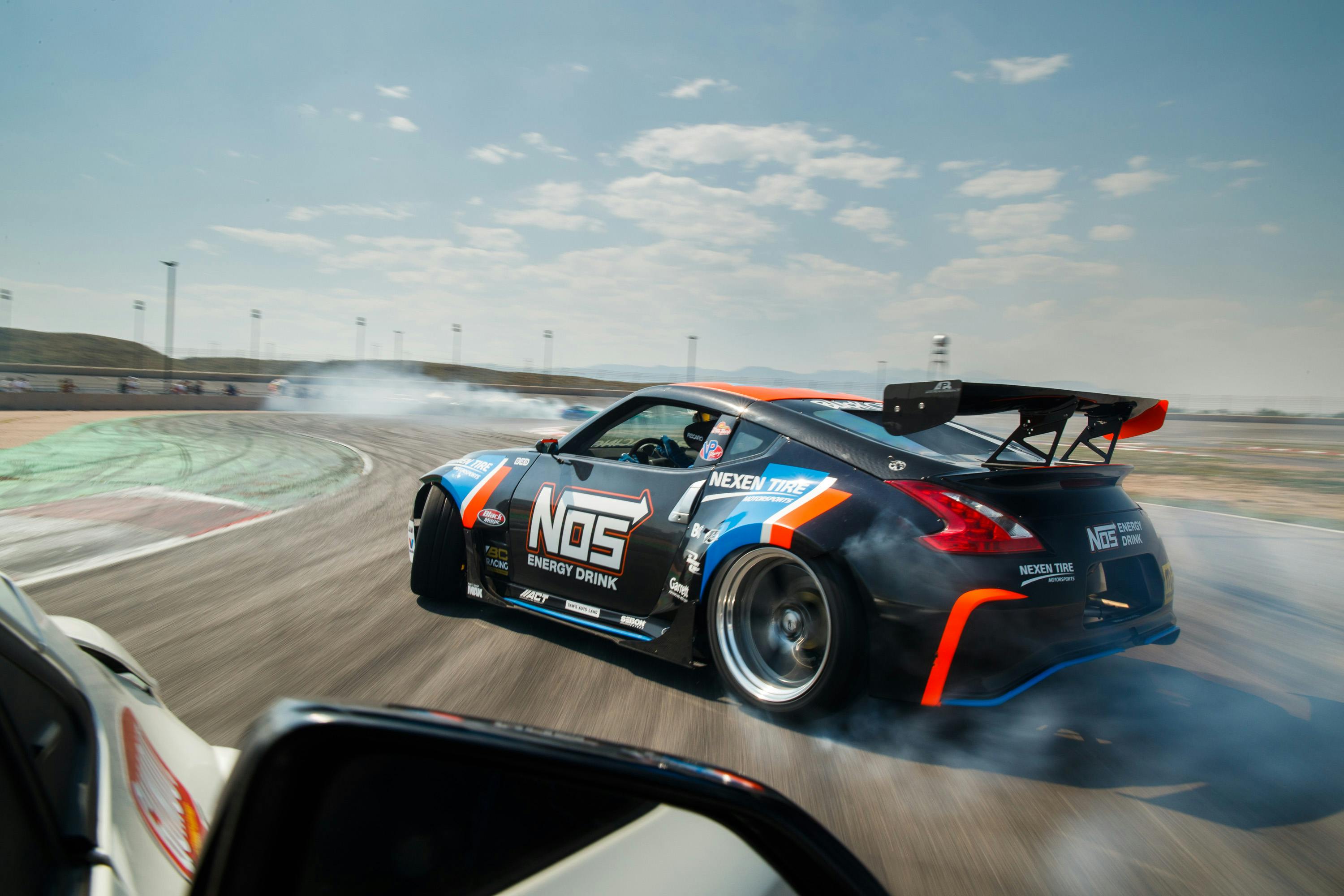
How Technology Is Changing Competitive Drifting in 2026 Introduction
Drifting has always been a motorsport defined by skill, precision, and style. Unlike traditional racing, where the objective is simply to cross the finish line first, competitive drifting challenges drivers to maintain controlled oversteer while navigating corners with speed, accuracy, and commitment. Every run demands perfect synchronization between the driver and the machine, making drifting one of the most technically demanding disciplines in motorsport.
In 2026, however, success in professional drifting depends on much more than driver talent alone. Behind every championship-winning performance is an impressive combination of engineering, data analysis, and technological innovation. Teams now rely on advanced telemetry, simulation software, artificial intelligence, lightweight materials, and sophisticated vehicle dynamics to gain a competitive advantage.
Technology has fundamentally changed how drift cars are built, how drivers train, and how teams prepare for competition. While the excitement of tire smoke and close tandem battles remains at the heart of the sport, modern drifting has become a showcase of cutting-edge automotive engineering.
Data Has Become a Competitive Advantage
One of the most significant developments in professional drifting is the widespread use of data acquisition systems.
Modern drift cars continuously record information during every run, allowing engineers and drivers to analyze performance in remarkable detail.
Common telemetry data includes:
Steering angle Throttle position Brake pressure Engine RPM Wheel speed Suspension travel Tire temperature Differential behavior
After each session, teams review this information to identify areas where performance can be improved.
Instead of relying solely on driver feedback, engineers can now make decisions based on measurable data, leading to more consistent performance throughout a competition weekend.
Artificial Intelligence Is Improving Vehicle Analysis
Artificial Intelligence (AI) is becoming an increasingly valuable tool in motorsport engineering.
Although AI does not replace the driver's instinct or experience, it can process enormous amounts of performance data far more quickly than traditional analysis methods.
Modern AI software assists teams by:
Identifying inefficient driving inputs Predicting tire degradation Recommending suspension adjustments Monitoring engine performance Detecting mechanical issues before failure Optimizing vehicle setup for changing track conditions
This allows teams to make faster and more informed decisions between qualifying sessions and tandem battles.
As AI technology continues advancing, its role within professional drifting is expected to grow significantly.
Advanced Suspension Engineering
Suspension remains one of the most important components of any competitive drift car.
Unlike circuit racing, drifting requires vehicles to maintain stability while operating at extreme steering angles.
Modern suspension systems feature:
Fully adjustable coilovers Precision damping control Custom steering knuckles Adjustable control arms Reinforced subframes Motorsport-grade bushings
Engineers carefully tune suspension geometry to maximize grip while maintaining smooth transitions between corners.
Even small adjustments to camber, caster, toe, or ride height can dramatically influence a driver's confidence during competition.
Steering Angle Technology
Perhaps one of the most visible technological advancements in drifting is the development of extreme steering-angle kits.
Professional drift cars can now achieve steering angles exceeding 65 degrees, allowing drivers to maintain aggressive drift angles without losing control.
These systems improve:
Stability during transitions Drift initiation Recovery from mistakes Tandem battle precision Overall vehicle responsiveness
Manufacturers continue refining steering geometry to provide smoother feedback while reducing mechanical stress on suspension components.
Engine Management Has Reached New Levels
Power alone is no longer enough to win professional drifting events.
Modern engine management systems give teams complete control over vehicle performance.
Advanced electronic control units (ECUs) allow engineers to adjust:
Fuel delivery Ignition timing Turbocharger boost pressure Throttle mapping Launch control Traction strategies Cooling management
Drivers can even switch between multiple engine maps depending on track conditions or competition strategy.
This flexibility improves reliability while maximizing performance throughout an event.
Lightweight Materials Improve Performance
Reducing vehicle weight remains one of the most effective ways to improve handling.
Professional drift teams increasingly use lightweight materials such as:
Carbon fiber body panels Composite doors Polycarbonate windows Aluminum suspension components Titanium exhaust systems
Lower weight improves acceleration, braking, steering response, and overall chassis balance.
Importantly, engineers aim not only to reduce total weight but also to optimize weight distribution across the vehicle.
Tire Technology Continues to Advance
Tires play a central role in drifting.
Professional drivers intentionally generate enormous amounts of wheelspin while maintaining precise vehicle control.
Modern performance tires are designed to deliver:
Predictable grip characteristics Consistent heat management Improved durability Progressive breakaway behavior
Manufacturers work closely with professional teams to develop compounds capable of performing under the extreme temperatures generated during competition.
Better tire technology has significantly improved consistency during long events.
Aerodynamics in Modern Drifting
Although drifting operates at lower average speeds than many forms of circuit racing, aerodynamics have become increasingly important.
Modern drift cars feature:
Large front splitters Rear diffusers Adjustable rear wings Ventilated body panels Improved cooling ducts
Rather than maximizing downforce alone, aerodynamic components also help stabilize airflow while improving engine cooling and brake performance.
As power outputs continue increasing, efficient cooling systems become even more critical.
Simulation Training Is Changing Driver Development
Professional drivers no longer rely exclusively on track time to improve their skills.
Advanced driving simulators now replicate:
Vehicle dynamics Steering feedback Tire behavior Weather conditions Track layouts
Simulation allows drivers to practice new circuits, refine techniques, and experiment with different vehicle setups before arriving at an event.
This approach reduces costs while accelerating driver development.
Many professional teams integrate simulator sessions into their regular training programs.
Real-Time Communication Between Driver and Team
Technology has also improved communication during competitions.
Teams use advanced radio systems combined with live telemetry to monitor vehicle performance throughout each run.
Engineers can quickly identify issues involving:
Engine temperatures Tire pressures Fuel systems Electrical components
Rapid communication allows mechanics to resolve potential problems before they become race-ending failures.
Hybrid and Electric Drifting
The automotive industry is gradually transitioning toward electrification, and drifting is beginning to follow the same path.
Electric drift cars offer several advantages:
Instant torque delivery Smooth power application Reduced mechanical complexity Lower maintenance requirements Quieter operation
Hybrid technologies are also being explored as manufacturers seek to combine traditional internal combustion performance with electric assistance.
Although gasoline-powered drift cars remain dominant in 2026, electrified competition vehicles are expected to become increasingly common over the coming years.
Safety Technology Has Improved Significantly
Modern safety equipment has evolved alongside vehicle performance.
Professional competitions now require:
FIA-approved racing seats Six-point harness systems Fire suppression equipment Advanced roll cages Head and neck restraint devices Data-monitored safety systems
Vehicle construction techniques also continue improving crash protection while minimizing weight.
These innovations allow drivers to compete aggressively with greater confidence.
Challenges of Rapid Technological Progress
While technology creates exciting opportunities, it also presents challenges.
Rising Costs
Advanced engineering requires significant financial investment.
Smaller teams may struggle to compete with larger organizations possessing greater technical resources.
Complexity
Modern drift cars require specialized knowledge in electronics, software, and data analysis.
Technical expertise has become almost as valuable as mechanical skill.
Maintaining Competitive Balance
Championship organizers continue refining regulations to ensure technology enhances competition without creating unfair advantages.
Finding this balance remains essential for the sport's long-term success.
The Future of Drifting Technology
Several innovations are expected to shape the next generation of professional drifting.
These include:
AI-assisted race engineering Machine learning for suspension optimization Enhanced battery technology Sustainable racing fuels Fully electric professional championships Cloud-based telemetry analysis Augmented reality driver coaching
As these technologies mature, teams will continue finding new ways to improve performance while maintaining the spectacular driving that defines drifting.
Conclusion
Technology has transformed competitive drifting into one of the most sophisticated disciplines in modern motorsport. While exceptional driving skill remains the foundation of every successful performance, today's professional teams rely heavily on advanced engineering, data analytics, artificial intelligence, simulation training, and precision vehicle development to gain an edge over their rivals.
Innovations in suspension systems, steering geometry, engine management, lightweight materials, and telemetry have made modern drift cars faster, more reliable, and more controllable than ever before. At the same time, advances in safety equipment and driver training continue raising professional standards across the sport.
As the automotive industry embraces electrification, digital engineering, and AI-powered analysis, drifting is evolving alongside these technological breakthroughs. Rather than replacing the excitement and creativity that have always defined the sport, technology is enhancing its competitive depth and expanding its global appeal.
Looking beyond 2026, one thing is clear: the future of drifting will be shaped not only by fearless drivers but also by the engineers, software developers, and innovators working behind the scenes to push the boundaries of what is possible on the track.
Published on 7/1/2026