When the European Union and the United States implemented draconian tariffs on imported Chinese electric vehicles in late 2024 and early 2025, Western legacy automakers breathed a collective sigh of relief. The prevailing thought in Detroit and Stuttgart was that these financial barriers would protect their domestic markets from the relentless, subsidized onslaught of brands like BYD, NIO, and Geely. As we assess the global automotive landscape on July 13, 2026, it is clear that this protectionist strategy has failed catastrophically. Instead of retreating, Chinese automakers executed a brilliant geopolitical end-run, fundamentally rewiring the global supply chain and accelerating their conquest of the West.
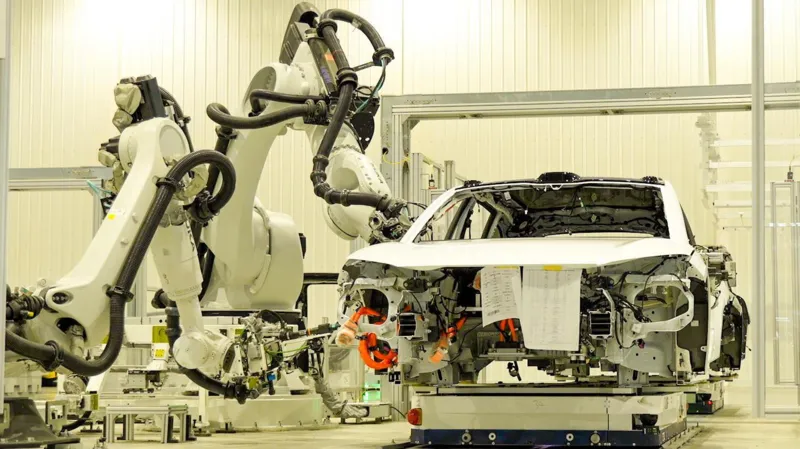
The miscalculation of Western policymakers was treating Chinese automakers as simple exporters rather than sophisticated, vertically integrated multinational corporations. Faced with tariffs that effectively doubled the price of a car shipped from Shanghai to Rotterdam, companies like BYD did not abandon the European market. Instead, they aggressively accelerated their localized manufacturing strategies. In a feat of logistical brilliance, BYD’s massive manufacturing complex in Szeged, Hungary, is now fully operational, producing hundreds of thousands of vehicles per year. Because Hungary is a member of the European Union, these vehicles bypass the import tariffs entirely, arriving in European showrooms at the same aggressive, disruptive price points that made BYD famous in Asia.
Across the Atlantic, a similar, albeit more politically complex, realignment is unfolding. Unable to build factories in the US due to stringent geopolitical restrictions, Chinese brands have pivoted to Mexico. By July 2026, massive assembly plants in Nuevo León and Monterrey, backed by Chinese capital and utilizing highly localized supply chains, are churning out next-generation EVs. While the US government has attempted to close this "Mexico loophole" by restricting EV tax credits to vehicles with specific battery mineral origins, the sheer cost competitiveness of these vehicles—often priced $10,000 to $15,000 below comparable American-made EVs—has made them immensely popular among budget-conscious consumers, even without the tax credit.
The devastating impact of this realignment is painfully evident in the Q2 2026 financial reports of legacy automakers. Volkswagen, Stellantis, and Ford have all reported severe margin compression and significant market share losses in the crucial sub-$35,000 EV segment. The Chinese vehicles are not winning solely on price; they are winning on technology. A 2026 BYD sedan built in Hungary comes equipped with rotating screens, advanced driver-assistance systems that rival Tesla, and ultra-fast charging capabilities that European competitors cannot match at that price point.
The great tariff realignment of 2026 proves a harsh lesson in global economics: in a deeply interconnected world, protectionist tariffs are merely a temporary speed bump, not a wall. By transitioning from exporters to local manufacturers, Chinese automakers have effectively naturalized their supply chains, making them immune to the very tariffs designed to stop them. The Western automotive industry is now forced into a brutal, localized price war on its own home turf, a battle it is currently ill-equipped to win.
Published on 7/13/2026