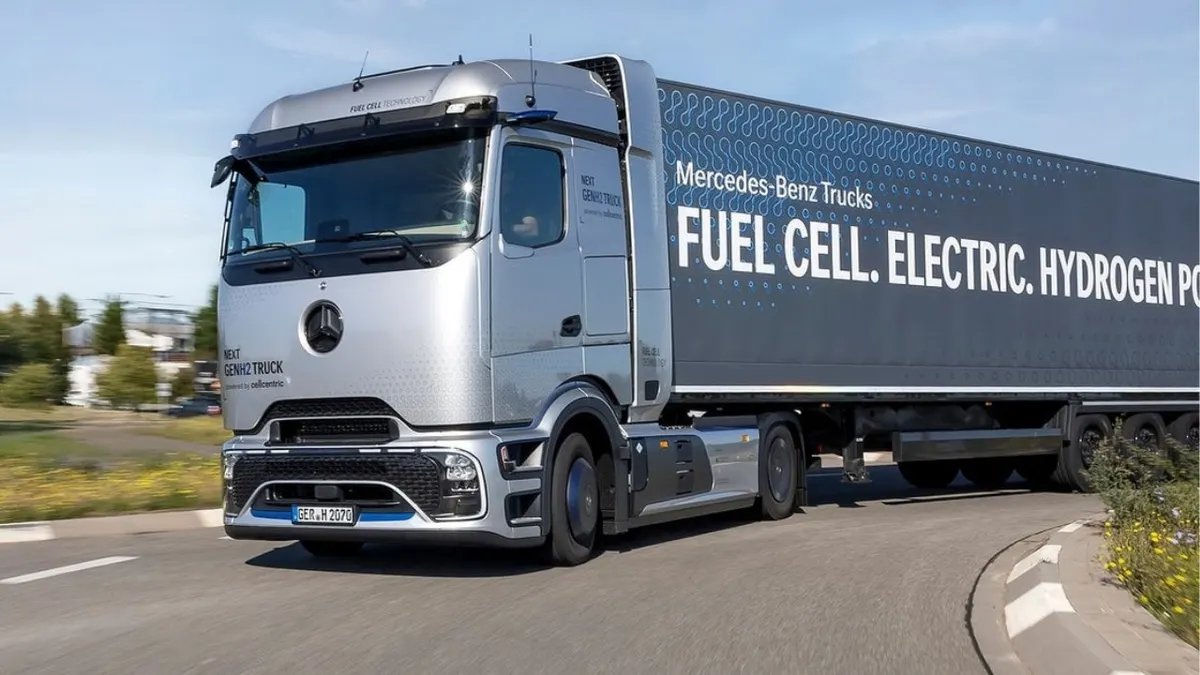
In the great debate over the future of automotive propulsion, battery electric vehicles (BEVs) have won a decisive victory in the passenger car segment. However, as the global logistics industry confronts the harsh realities of decarbonization in the summer of 2026, a completely different narrative is emerging for heavy-duty transport. The physics of moving 80,000 pounds of cargo across continents have proven incompatible with heavy lithium-ion batteries, paving the way for the sudden, decisive commercial breakthrough of hydrogen fuel cell technology in the trucking sector.
The fundamental problem with battery-electric semi-trucks is a merciless law of physics: energy density versus weight. To achieve a range of 500 miles—a standard daily route for a long-haul trucker—a battery pack must weigh upwards of 15,000 pounds. This massive weight directly eats into the truck’s legal payload capacity, effectively turning a profitable logistics operation into an unprofitable one. Furthermore, a truck driver mandated to take a 30-minute rest break cannot afford to wait four hours for a megawatt-class charger to replenish that massive battery. Hydrogen fuel cells solve both problems elegantly. A hydrogen fuel cell stack weighs a fraction of a battery pack, and refueling a high-pressure hydrogen tank takes roughly 10 to 15 minutes, perfectly aligning with existing commercial driving regulations.
July 2026 marks the moment this theory became commercial reality. After years of limited pilot programs, the first mass-produced hydrogen fuel cell trucks are officially rolling off assembly lines and entering commercial fleet operations. Hyundai’s XCIENT Fuel Cell truck, having already proven its reliability in European pilot fleets, is now seeing massive order volumes from logistics giants in Germany and the Netherlands. Simultaneously, joint ventures between traditional truck manufacturers and tech firms are deploying hundreds of fuel cell trucks along dedicated hydrogen corridors in California and Texas.
Crucially, this 2026 pivot is not just about the trucks; it is about the fuel. The historic Achilles' heel of hydrogen was the lack of "green" production and refueling infrastructure. In a remarkable feat of industrial coordination, the first half of 2026 has seen the activation of massive green hydrogen production hubs. Powered by dedicated solar and wind farms in the American Southwest and the coastlines of Australia, these electrolyzer facilities are producing zero-carbon hydrogen at a scale that is finally bringing the pump price down to a level competitive with diesel. Along major interstate highways, networks of high-capacity hydrogen refueling stations are opening at a pace that mirrors the early rollout of diesel truck stops.
The implications for global supply chains are profound. Retail giants and shipping conglomerates are increasingly mandating that their contracted carriers achieve specific carbon reduction targets, driving the demand for these zero-emission fuel cell trucks. While battery electric trucks will dominate local drayage and short-haul routes where weight is less of an issue and overnight depot charging is feasible, hydrogen has claimed the interstate highway. The heavy-duty hydrogen pivot of 2026 proves that the future of transportation will not be dictated by a single technology, but by the uncompromising demands of physics and economics in specific use cases.
Published on 7/13/2026