Top Drift Cars Dominating the 2026 Season: Performance, Technology, and Setup Introduction
Professional drifting has never been more competitive than it is in 2026. Across premier championships such as Formula DRIFT, Drift Masters, and Japan's D1 Grand Prix, drivers are pushing both themselves and their machines to new limits. Modern drift cars routinely produce between 800 and 1,200 horsepower, feature highly engineered suspension systems, and generate steering angles that would have been unimaginable just a decade ago.
Yet raw horsepower alone does not guarantee victory.
Winning a drifting competition requires the perfect combination of chassis balance, suspension geometry, throttle response, steering precision, and driver confidence. Teams spend countless hours refining every aspect of their vehicles to achieve maximum consistency during qualifying runs and tandem battles.
Although new platforms continue to emerge, several legendary drift cars remain dominant thanks to their proven reliability, extensive aftermarket support, and exceptional handling characteristics. From iconic Japanese sports cars to European coupes and American V8-powered machines, the 2026 season showcases a diverse range of vehicles competing at the highest level.
Here's a closer look at the drift cars defining the current era of professional drifting.
What Makes a Great Drift Car?
A competitive drift car is designed around control rather than outright speed.
The ideal platform typically offers:
Rear-wheel drive Balanced weight distribution Strong chassis rigidity Responsive steering Predictable suspension geometry Reliable power delivery Extensive aftermarket support
Professional teams then enhance these characteristics through custom engineering tailored to each driver's style.
Unlike traditional racing, where aerodynamic efficiency is often the primary focus, drifting prioritizes controllability during sustained oversteer.
Nissan Silvia (S13, S14, and S15)
No discussion of drifting is complete without mentioning the legendary Nissan Silvia.
For decades, the Silvia has been regarded as one of the greatest drift platforms ever built.
Reasons for its continued popularity include:
Lightweight chassis Excellent weight balance Rear-wheel-drive layout Massive aftermarket availability Proven competitive history
The S15 remains particularly popular in professional competition due to its refined suspension geometry and highly tunable engine options.
Even in 2026, Silvia-based builds continue appearing in international championships, demonstrating the timeless engineering of Nissan's iconic sports coupe.
Nissan 350Z and 370Z
The Nissan Z platform has become one of the most common choices for both amateur and professional drifters.
The naturally aspirated VQ engine offers dependable performance, while the chassis provides exceptional stability during aggressive transitions.
Advantages include:
Strong factory reliability Affordable replacement parts Large aftermarket ecosystem Excellent steering geometry High power potential
Many newcomers begin their drifting careers with a 350Z before progressing into professional competition.
The platform continues to rank among the most recommended drift cars thanks to its durability and versatility.
Toyota GR Supra
Toyota's modern GR Supra has become an increasingly competitive platform in professional drifting.
Its turbocharged engine, rigid chassis, and advanced suspension design provide an excellent foundation for high-performance builds.
Professional teams often modify the GR Supra with:
Wide-body aerodynamic kits Sequential racing transmissions Reinforced rear differentials Custom steering angle kits Motorsport-grade suspension systems
Several teams competing internationally have demonstrated the Supra's ability to compete against more established drift platforms.
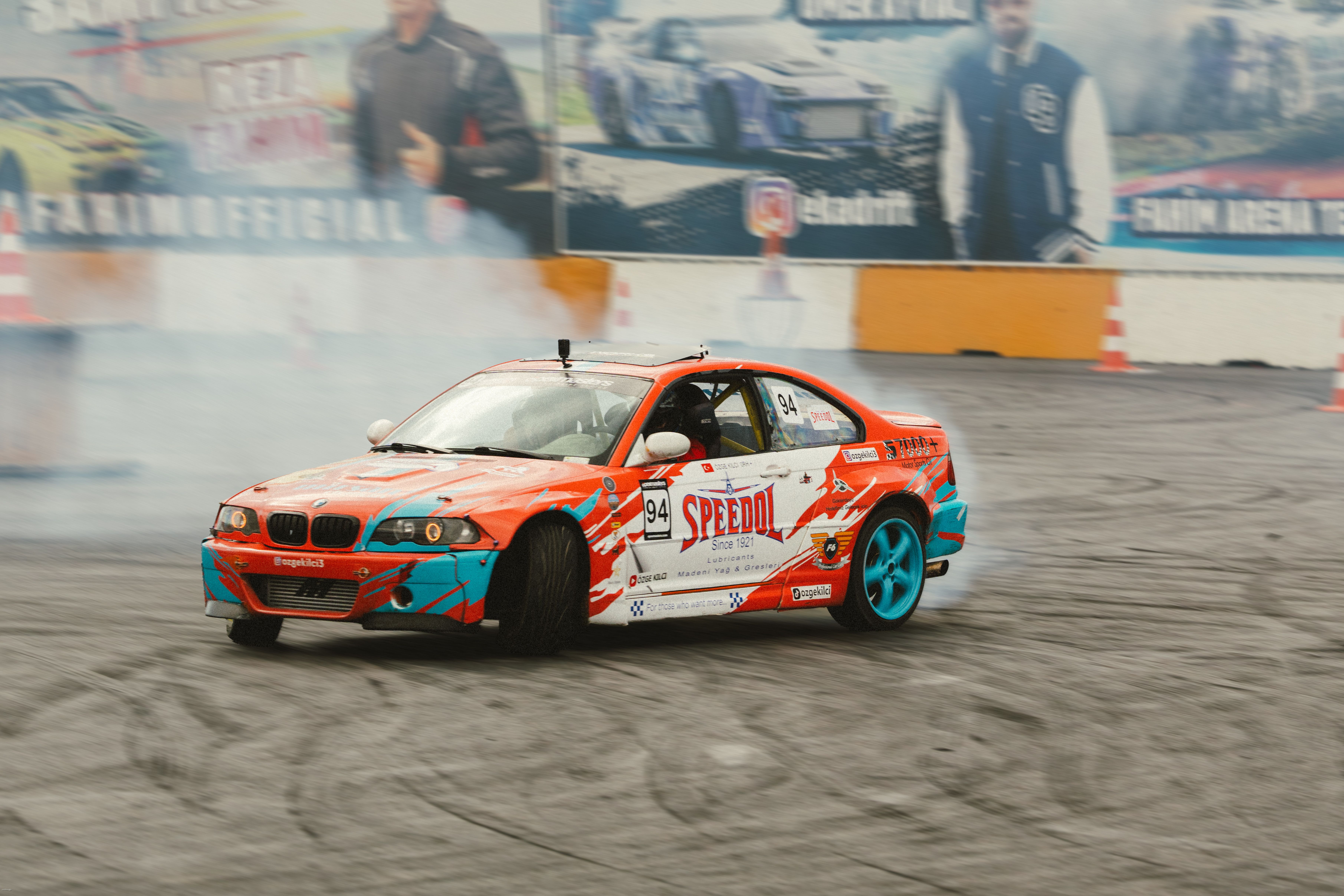
BMW E36 and E46
European manufacturers have become increasingly influential in drifting, with the BMW E36 and E46 remaining among the sport's most respected platforms.
These vehicles are valued for:
Nearly perfect weight distribution Smooth inline-six engines Strong chassis rigidity Excellent steering feel Affordable performance upgrades
Many professional drivers appreciate the predictable handling characteristics that allow aggressive entries while maintaining precise control throughout long drift sequences.
The availability of aftermarket suspension components has further strengthened the BMW platform's popularity.
Toyota GR86 and GT86
Compact, lightweight, and exceptionally balanced, Toyota's GT86 and GR86 platforms continue attracting both amateur and professional drivers.
Although factory power is relatively modest, competition builds often receive significant engine upgrades capable of producing several hundred additional horsepower.
Benefits include:
Low center of gravity Lightweight chassis Excellent handling balance Predictable transitions Strong aftermarket support
These characteristics make the platform particularly attractive for technical circuits requiring precise vehicle control.
Ford Mustang RTR
American muscle remains a powerful force in professional drifting.
The Ford Mustang RTR has become one of the sport's most recognizable competition vehicles.
Powered by high-output V8 engines, these cars deliver:
Massive torque Aggressive acceleration Exceptional tire smoke Strong visual presence
Advanced suspension development has transformed the Mustang into a highly competitive drift machine despite its larger dimensions.
Several championship-winning drivers continue demonstrating its capabilities on the world's biggest stages.
Toyota Chaser (JZX100)
The Toyota Chaser has achieved legendary status among drift enthusiasts.
Originally designed as a performance sedan, it offers outstanding chassis dynamics and one of Toyota's most respected turbocharged engines.
Professional teams appreciate:
Long wheelbase stability Robust drivetrain Strong turbocharging potential Excellent balance Proven competition history
Although becoming increasingly rare, well-prepared Chasers remain highly competitive.
Engine Builds Continue to Evolve
Modern professional drift cars rarely retain factory engine specifications.
Common engine configurations include:
Turbocharged inline-six engines Naturally aspirated V8 conversions Twin-turbo V6 builds Supercharged V8 setups
Many championship-winning vehicles now exceed 1,000 horsepower.
For example, custom-built competition cars in Drift Masters have showcased supercharged NASCAR-derived V8 engines capable of revving beyond 9,000 rpm, highlighting the extreme engineering found in today's professional drifting.
Suspension Setup Is Just as Important as Power
Experienced teams often emphasize that suspension tuning determines more performance than additional horsepower.
Professional setups typically include:
Adjustable coilovers Modified steering knuckles Increased steering angle Reinforced control arms Adjustable anti-roll bars Motorsport alignment settings
Every adjustment influences how the car initiates, maintains, and exits a drift.
Drivers frequently work alongside engineers throughout an event to fine-tune suspension geometry based on tire wear, track grip, and weather conditions.
Tire Selection Plays a Critical Role
Unlike circuit racing, drifting requires balancing grip with controllable wheel spin.
Professional teams carefully select tires based on:
Track temperature Surface conditions Vehicle power Driving style Competition format
Rear tires generate enormous heat during competition and may require replacement after only a few runs.
Managing tire performance has become one of the most important strategic elements of professional drifting.
Technology Is Changing Drift Car Development
Modern drift teams increasingly rely on advanced technology.
Data acquisition systems monitor:
Steering angle Throttle position Engine RPM Tire temperatures Suspension movement Brake pressure Vehicle speed
This information allows engineers to optimize setup decisions with remarkable precision.
Video analysis and telemetry also help drivers improve consistency during tandem battles.
Reliability Wins Championships
A drift car capable of producing enormous power means little if it cannot complete an event.
Professional teams prioritize:
Cooling efficiency Transmission durability Differential strength Engine reliability Electrical system stability
Consistency often separates championship contenders from occasional race winners.
Many successful teams choose proven mechanical solutions rather than pursuing maximum horsepower alone.
Looking Ahead
As the 2026 season progresses, drift car development continues advancing rapidly.
Emerging trends include:
Lightweight composite materials Hybrid-assisted performance systems AI-supported telemetry analysis Improved steering geometry Enhanced suspension adjustability Sustainable motorsport technologies
While innovation continues, the core principles of successful drifting remain unchanged: balance, precision, reliability, and driver confidence.
Conclusion
The best drift cars of 2026 demonstrate that success is built on far more than horsepower. Legendary platforms such as the Nissan Silvia, Nissan 350Z, Toyota GR Supra, BMW E46, Toyota GR86, Ford Mustang RTR, and Toyota Chaser continue dominating professional drifting because they combine outstanding chassis dynamics with immense tuning potential.
As Formula DRIFT, Drift Masters, and D1 Grand Prix continue raising the level of competition, teams are investing heavily in advanced suspension engineering, telemetry, lightweight materials, and drivetrain reliability. These innovations are producing faster, more precise, and more spectacular drift cars than ever before.
For aspiring drifters, choosing the right platform depends on experience, budget, and personal driving style. For fans, however, every competition offers an opportunity to witness the incredible blend of engineering excellence and driver skill that makes drifting one of the most thrilling disciplines in modern motorsport. As technology evolves and new talent enters the sport, the machines dominating today's championships will continue to inspire the next generation of drivers and enthusiasts around the world.
Published on 7/1/2026